
Cart
0
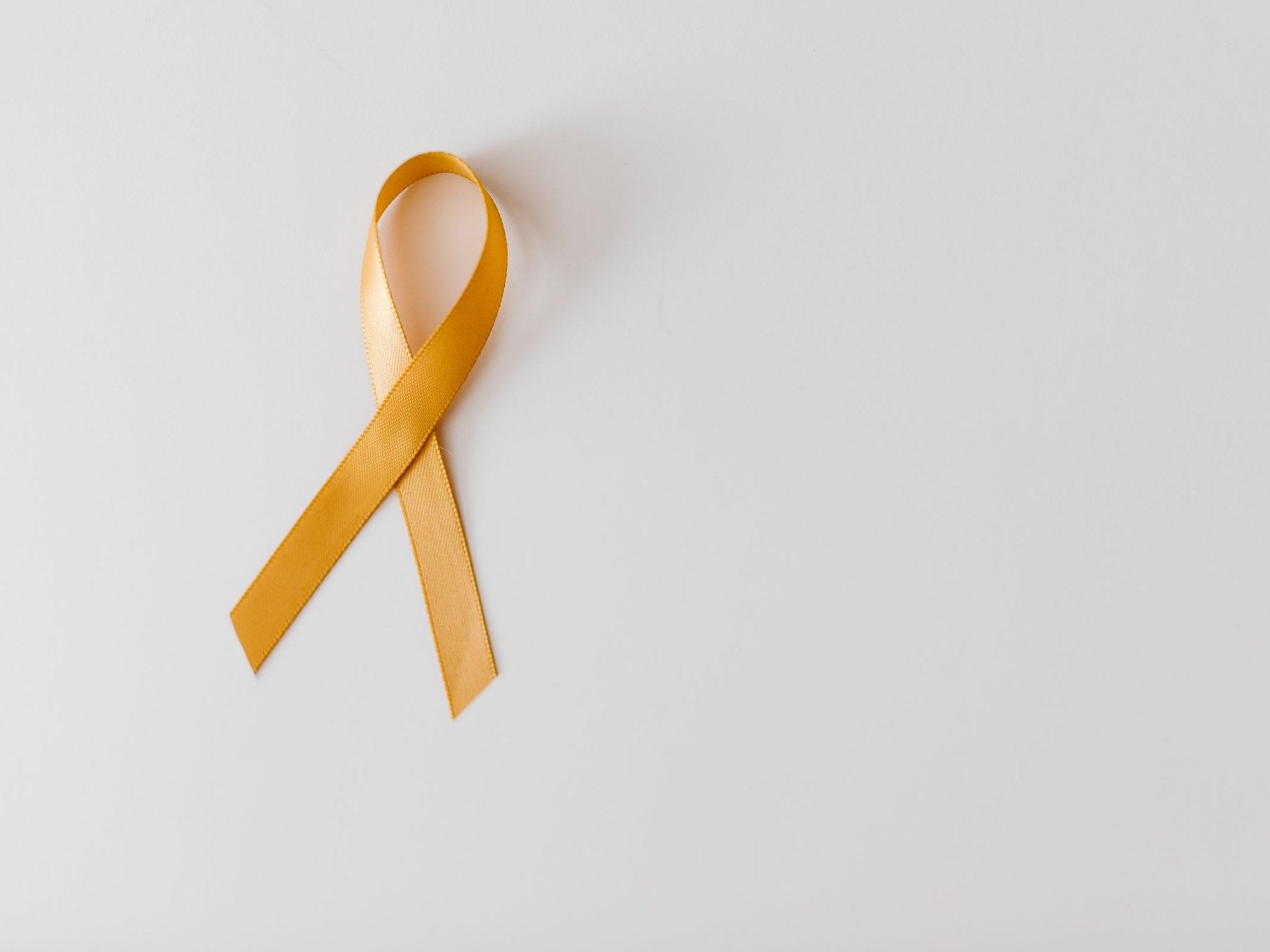
Pink is famous. Most people can tell you what a pink ribbon means without thinking.
Gold, fewer people know. And the story of how it got chosen is better than you'd expect, because it wasn't chosen by a marketing department.
It was chosen by parents.
1997, and a group of mothers and fathers
The gold ribbon for childhood cancer came out of the American Childhood Cancer Organization — known then as the Candlelighters Childhood Cancer Foundation. In 1997 the organization funded the production of the first gold ribbons, as lapel pins, after board member Gigi Thorsen and a group of parents affected by childhood cancer settled on the color.
They picked gold for a reason that takes about one second to understand and a lot longer to recover from.
Gold is a precious metal. Children are the most precious thing in our lives. That was the whole argument. That was enough.
What makes it different from every other ribbon
Most awareness ribbons stand for one disease. Pink is breast cancer. Teal is ovarian.
Gold doesn't work like that. Gold stands for all childhood cancers — every leukemia, every brain tumor, every sarcoma, every rare diagnosis that most people will never hear the name of.
There's a practical reason. Childhood cancers are not one illness; they're dozens, and most of them are rare enough on their own that no single one would ever get its own month, its own ribbon, or its own funding campaign. Gold gathers them.
It means a family whose child has something almost nobody has heard of still has a color to point at. In a world that mostly organizes itself around the common things, that matters more than it sounds.
Our charm is gold too
That was not an accident.
If you've ever found one of our Living Undefeated Charms — on a fence post in Savannah, in a flower box in Japan, tucked into a rock wall in the Colorado mountains — you'll have noticed it's gold, with a heart held in two hands, and three words around the edge: Courage, Hope, Resilience.
Same reasoning as the ribbon. The most precious metal, for the most precious thing.
The difference is that a ribbon is worn and a charm is left behind. Ours are made to be found by a stranger, kept for a while, and passed on to somebody who needs it more. They travel. They've turned up on four continents so far, and we didn't take most of them there — other people did.
What to do with this
Wear gold this month if you want to. Put a ribbon on your profile. Both are good and both are free.
But if you want the version that reaches an actual person: leave something behind. A charm on a park bench. A sticker where it's allowed. A message to a family you know is in the middle of it.
Gold on a lapel tells the world you know. Gold left in a stranger's path tells one person they're not alone.
Both matter. The second one is harder, and it's the one we're built for.
Keep reading: Gold September, when your child didn’t make it · The charities we support and how we vet them
Tag us with #LivingUnDefeated if you find a charm, leave one, or just wear gold this month. We collect every one of them.
Source: American Childhood Cancer Organization — Gold Ribbon Awareness, retrieved September 14, 2026. ACCO is one of the two organizations The Undefeated Fund currently raises money for.


